
Electrical Construction

Electrical Construction in Duson, LA for New Builds, Additions, and Commercial Projects
Every new building in Duson starts with a plan for how power will enter, how it will be distributed, and how it will serve the people and equipment inside. Superior Electric of Louisiana LLC provides electrical construction in Duson, LA for new homes, home additions, commercial buildings, and shop structures. Electrical construction covers everything from setting temporary power on a job site to installing the service entrance, running rough-in wiring, and completing final trim-out before inspection. Getting electrical construction right during the build is far less costly than correcting wiring problems after drywall, slabs, and finishes are in place, which is why builders and property owners across Duson, Scott, Rayne, and Lafayette plan their electrical construction carefully from the start.
New Residential Electrical Construction
Residential electrical construction in Acadiana has to account for heavy air conditioning loads, electric water heaters, outdoor living spaces, and growing demand for EV charging and backup power.
Service Entrance and Panel Placement
The service entrance, meter base, and main panel set the capacity for the entire home. Most new homes are built with 200-amp service, while larger homes or homes with shops may need more.
Rough-In Wiring
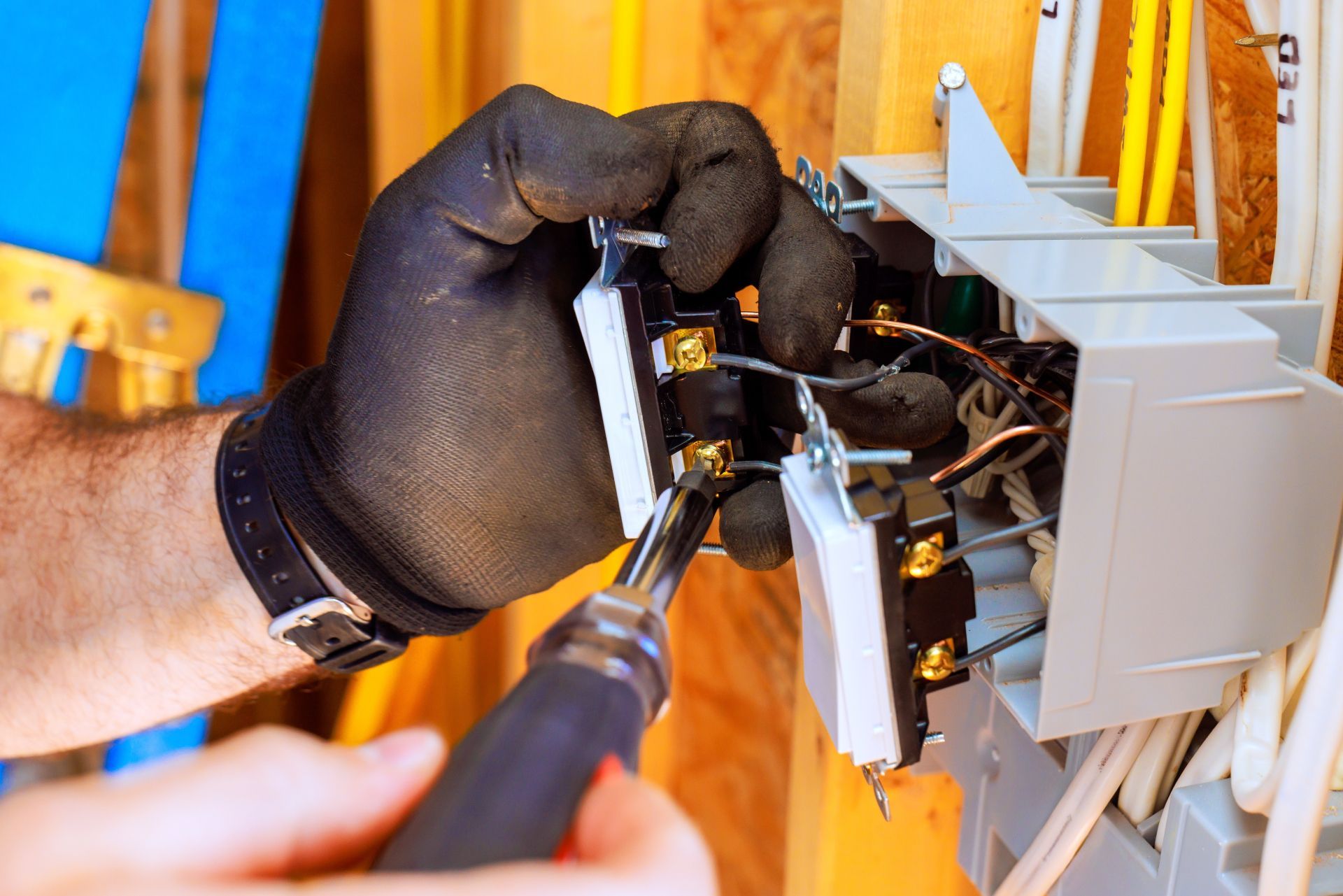
During rough-in, boxes are set and circuits are run through framing before insulation and drywall go up. Electrical construction at this stage determines outlet locations, switch layouts, lighting placement, and dedicated circuits for kitchens, laundry rooms, and HVAC equipment.
Trim-Out and Final Connections
After walls are finished, devices, fixtures, and breakers are installed, and every circuit is tested before the final inspection.
Commercial Electrical Construction
Commercial electrical construction involves larger services, more complex distribution, and stricter code requirements than residential work.
New Commercial Buildings
Offices, retail spaces, warehouses, and restaurants each need power distribution designed around their layout and equipment. Commercial electrical construction often includes subpanels, three-phase service, emergency lighting, and exit signage.
Metal Buildings and Shops
Metal buildings are common around Duson for agricultural, oilfield service, and storage use. Electrical construction in these structures typically involves conduit runs, high-bay lighting, and circuits for compressors, welders, and overhead doors.
Additions and Expansions
Adding square footage to an existing building requires confirming that the current service can support the new load or planning a service upgrade as part of the electrical construction.
The Electrical Construction Process from Plans to Final Inspection
Plan Review and Load Calculation
Electrical construction begins with reviewing drawings and calculating the total electrical load so the service, panels, and wiring are sized correctly.
Temporary Power
Many job sites need temporary power so other trades can work. A temporary pole provides safe, metered power during construction.
Rough-In Inspection
Once rough-in wiring is complete, the work is inspected before walls are closed.
Final Inspection and Energization
After trim-out, the final inspection is completed and the utility connects permanent service.
Code, Permits, and Site Conditions in Acadiana
Electrical construction in Louisiana must follow the National Electrical Code as adopted by the state, along with parish and municipal permitting requirements in Lafayette and Acadia parishes.
Flood Elevation and Equipment Placement
Low-lying lots and flood zones may require panels, disconnects, and equipment to be mounted above certain elevations.
Moisture and Corrosion
High humidity and frequent rain make weatherproof enclosures, proper conduit sealing, and GFCI protection important parts of electrical construction in South Louisiana.
Grounding and Lightning Exposure
Proper grounding electrode systems help protect structures and equipment from fault currents and lightning-related surges, which are common across Acadiana.
Working With Builders, Contractors, and Property Owners
Electrical construction works best when it is coordinated with the rest of the build schedule.
Coordination With Other Trades
Electrical rough-in has to be timed with framing, plumbing, HVAC, and insulation. Clear scheduling keeps the project moving.
Changes During Construction
Owners often add outlets, lighting, or equipment mid-project. Addressing changes before walls close keeps costs lower than adding them later.
Frequently Asked Questions About Electrical Construction in Duson, LA
What is electrical construction?
Electrical construction is the installation of a building's complete electrical system during new construction or major additions. It includes the service entrance, panels, wiring, devices, lighting, and connections for equipment.
When should an electrician get involved in a new build?
An electrician should be involved during planning so load calculations, panel placement, and circuit layout are set before framing begins. Early involvement prevents costly changes later.
What size electrical service does a new home need?
Most new homes in Louisiana are built with 200-amp service. Larger homes, homes with shops, or homes planning EV chargers and electric heating may need 320 or 400-amp service.
What happens during rough-in wiring?
During rough-in, electrical boxes are mounted and wiring is run through the framing to each outlet, switch, and fixture location. The work is inspected before insulation and drywall are installed.
Do I need a permit for electrical construction in Duson, LA?
Yes. New construction and additions require electrical permits and inspections through the local parish or municipality. The electrical contractor typically pulls the permit and schedules inspections.
What is temporary power on a construction site?
Temporary power is a metered pole or panel that supplies electricity to a job site so tools and equipment can run during construction. It is removed once permanent service is energized.
How long does electrical construction take for a new home?
Rough-in for a typical home takes several days, and trim-out takes a few more days once walls are finished. The overall timeline depends on the size of the home and the construction schedule.
Is commercial electrical construction different from residential?
Yes. Commercial electrical construction often involves three-phase power, larger services, conduit systems, emergency lighting, and stricter code requirements for occupancy and fire safety.
Can I add outlets or lighting after rough-in is complete?
Changes are possible, but they are easiest and least expensive before walls are closed. After drywall is installed, additions usually require cutting and patching.
How does flood risk affect electrical construction in Louisiana?
Properties in flood-prone areas may need panels, meters, and equipment installed above specified elevations. Local floodplain requirements should be reviewed during planning.
Who coordinates with the utility company for new service?
The electrical contractor typically coordinates with the utility on service requirements, meter placement, and the final connection after the electrical construction passes inspection.